
20251209 [새벽묵상] 하나님의 완전함과 인간의 불완전함 | God's Perfection and Human Imperfection (수/Josh 15:20~63)
- Seattle Hansarang Church 시애틀 한사랑 교회
- 2일 전
- 8분 분량


15:20 유다 자손의 지파가 그들의 가족대로 받은 기업은 이러하니라
20 This is the inheritance of the tribe of Judah, according to its clans:
15:21 유다 자손의 지파의 남쪽 끝 에돔 경계에 접근한 성읍들은 갑스엘과 에델과 야굴과
15:22 기나와 디모나와 아다다와
15:23 게데스와 하솔과 잇난과
15:24 십과 델렘과 브알롯과
15:25 하솔 하닷다와 그리욧 헤스몬 곧 하솔과
15:26 아맘과 세마와 몰라다와
15:27 하살갓다와 헤스몬과 벧 벨렛과
15:28 하살 수알과 브엘 세바와 비스요다와
15:29 바알라와 이임과 에셈과
15:30 엘돌랏과 그실과 홀마와
15:31 시글락과 맛만나와 산산나와 르바옷과
15:32 실힘과 아인과 림몬이니 모두 스물아홉 성읍과 그 마을들이었으며
21 The southernmost towns of the tribe of Judah in the Negev toward the boundary of Edom were:
Kabzeel, Eder, Jagur, 22 Kinah, Dimonah, Adadah, 23 Kedesh, Hazor, Ithnan, 24 Ziph, Telem, Bealoth, 25 Hazor Hadattah, Kerioth Hezron (that is, Hazor), 26 Amam, Shema, Moladah, 27 Hazar Gaddah, Heshmon, Beth Pelet, 28 Hazar Shual, Beersheba, Biziothiah, 29 Baalah, Iyim, Ezem, 30 Eltolad, Kesil, Hormah, 31 Ziklag, Madmannah, Sansannah, 32 Lebaoth, Shilhim, Ain and Rimmon—a total of twenty-nine towns and their villages.
15:33 평지에는 에스다올과 소라와 아스나와
15:34 사노아와 엔간님과 답부아와 에남과
15:35 야르문과 아둘람과 소고와 아세가와
15:36 사아라임과 아디다임과 그데라와 그데로다임이니 열네 성읍과 그 마을들이었으며
33 In the western foothills:
Eshtaol, Zorah, Ashnah, 34 Zanoah, En Gannim, Tappuah, Enam, 35 Jarmuth, Adullam, Sokoh, Azekah, 36 Shaaraim, Adithaim and Gederah (or Gederothaim)—fourteen towns and their villages.
15:37 스난과 하다사와 믹달갓과
15:38 딜르안과 미스베와 욕드엘과
15:39 라기스와 보스갓과 에글론과
15:40 갑본과 라맘과 기들리스와
15:41 그데롯과 벧다곤과 나아마와 막게다이니 열여섯 성읍과 그 마을들이었으며
37 Zenan, Hadashah, Migdal Gad, 38 Dilean, Mizpah, Joktheel, 39 Lachish, Bozkath, Eglon, 40 Kabbon, Lahmas, Kitlish, 41 Gederoth, Beth Dagon, Naamah and Makkedah—sixteen towns and their villages.
15:42 립나와 에델과 아산과
15:43 입다와 아스나와 느십과
15:44 그일라와 악십과 마레사니 아홉 성읍과 그 마을들이었으며
42 Libnah, Ether, Ashan, 43 Iphtah, Ashnah, Nezib, 44 Keilah, Akzib and Mareshah—nine towns and their villages.
15:45 에그론과 그 촌락들과 그 마을들과
15:46 에그론에서부터 바다까지 아스돗 곁에 있는 모든 성읍과 그 마을들이었으며
15:47 아스돗과 그 촌락들과 그 마을들과 가사와 그 촌락들과 그 마을들이니 애굽 시내와 대해의 경계에까지 이르렀으며
45 Ekron, with its surrounding settlements and villages; 46 west of Ekron, all that were in the vicinity of Ashdod, together with their villages; 47 Ashdod, its surrounding settlements and villages; and Gaza, its settlements and villages, as far as the Wadi of Egypt and the coastline of the Mediterranean Sea.
15:48 산지는 사밀과 얏딜과 소고와
15:49 단나와 기럇 산나 곧 드빌과
15:50 아납과 에스드모와 아님과
15:51 고센과 홀론과 길로이니 열한 성읍과 그 마을들이었으며
48 In the hill country:
Shamir, Jattir, Sokoh, 49 Dannah, Kiriath Sannah (that is, Debir), 50 Anab, Eshtemoh, Anim, 51 Goshen, Holon and Giloh—eleven towns and their villages.
15:52 아랍과 두마와 에산과
15:53 야님과 벧 답부아와 아베가와
15:54 훔다와 기럇 아르바 곧 헤브론과 시올이니 아홉 성읍과 그 마을들이었으며
52 Arab, Dumah, Eshan, 53 Janim, Beth Tappuah, Aphekah, 54 Humtah, Kiriath Arba (that is, Hebron) and Zior—nine towns and their villages.
15:55 마온과 갈멜과 십과 윳다와
15:56 이스르엘과 욕드암과 사노아와
15:57 가인과 기브아와 딤나니 열 성읍과 그 마을들이었으며
55 Maon, Carmel, Ziph, Juttah, 56 Jezreel, Jokdeam, Zanoah, 57 Kain, Gibeah and Timnah—ten towns and their villages.
15:58 할훌과 벧 술과 그돌과
15:59 마아랏과 벧 아놋과 엘드곤이니 쪽을 지나고 여섯 성읍과 그 마을들이었으며
58 Halhul, Beth Zur, Gedor, 59 Maarath, Beth Anoth and Eltekon—six towns and their villages.
15:60 기럇 바알 곧 기럇 여아림과 랍바이니 두 성읍과 그 마을들이었으며
60 Kiriath Baal (that is, Kiriath Jearim) and Rabbah—two towns and their villages.
15:61 광야에는 벧 아라바와 밋딘과 스가가와
15:62 닙산과 소금 성읍과 엔 게디니 여섯 성읍과 그 마을들이었더라
61 In the wilderness:
Beth Arabah, Middin, Sekakah, 62 Nibshan, the City of Salt and En Gedi—six towns and their villages.
15:63 예루살렘 주민 여부스 족속을 유다 자손이 쫓아내지 못하였으므로 여부스 족속이 오늘까지 유다 자손과 함께 예루살렘에 거주하니라
63 Judah could not dislodge the Jebusites, who were living in Jerusalem; to this day the Jebusites live there with the people of Judah.
우리는 어제 갈렙과 그의 사위인 옷니엘, 그리고 갈렙의 딸이자 옷니엘의 신부가 된 악사의 이야기를 보았습니다. 14장부터 이어지는 갈렙과 그의 가족들의 이야기는 한가지 교훈을 가르키고 있지요. 그것은 바로 하나님을 신뢰함으로 용기 있게 자신의 분깃을 구하는 것입니다. 너무나 유명한 말씀. 14:12의 “그날에 여호와께서 그날 말씀하신 이 산지를 내게 주소서 당신도 그 날에 들으셨거니와 그 곳에는 아낙 사람이 있고 그 성읍들은 크고 견고할지라도 여호와께서 나와 함께 하시면 내가 여호와께서 말씀하신 대로 그들을 쫓아내리이다” 또한 어제의 말씀 15:19에서 갈렙의 딸인 악사도 옷시엘에게 시집을 가면서 당당하게 갈렙에게 자신의 분깃을 요구합니다. “이르되 내게 복을 주소서 아버지께서 나를 네겝 땅으로 보내시오니 샘물도 내게 주소서 하매 갈렙이 윗샘과 아랫샘을 그에게 주었더라” 이들은 믿음을 가지고 자신의 분깃을 구하였습니다. 그 결과 요청한 것을 받았습니다. 바로 이 믿음이 중요합니다. 오늘 본문은 이 갈렙의 가문이 속한 유다 지파가 제비를 뽑아 받게 된 땅을 설명하고 있습니다. 제비를 뽑아서 받은 땅이라는 것은 하나님의 뜻을 따라 받았다는 말이지요. 그런데 그 설명이 성읍 이름만 적는데도 무려44절에 이르는 어마어마한 땅입니다. 참으로 큰 축복을 받은 것이 아닐 수 없지요. 하지만 이렇게 방대한 성읍들의 리스트를 마무리 짓는 말씀은 그들이 예루살렘 주민 여부스 족속을 쫓아내지 못하였다는 말씀입니다. 실로 이상하지요. 자, 그러면 오늘은 본문과 주변의 말씀들의 맥락을 통해 “하나님의 완전하심과 인간의 불완전함”에 대해 말씀을 나누기 원합니다.
[Introduction]
We recently studied the story of Caleb, his son-in-law Othniel, and Caleb’s daughter, Achsah. The narratives of Caleb and his family, starting in Chapter 14, point to one essential lesson: courageously asking for one's inheritance by trusting God.
Caleb’s famous declaration in 14:12 epitomizes this faith: "Now give me this hill country that the Lord promised me that day. You yourself heard then that the Anakites were there, and their cities were large and fortified; but, with the Lord helping me, I will drive them out, just as the Lord said."
Similarly, in yesterday's passage (15:19), Achsah, upon marrying Othniel, boldly requested her portion from Caleb: "She said, 'Give me a blessing. Since you have given me land in the Negeb, give me also springs of water.' So Caleb gave her the upper and lower springs."
They asked for their portion with faith, and as a result, they received what they requested. This faith is crucial.
Today’s text describes the vast territory that the tribe of Judah, to which Caleb belonged, received by lot. Being chosen by lot meant receiving the land according to God's will. This immense territory is described over 44 verses, listing city after city—a truly great blessing!
Yet, the long list of these extensive cities ends abruptly with a sobering statement: they did not drive out the Jebusites, the inhabitants of Jerusalem. This seems illogical.
Today, through the context of this chapter, I want to share a message on God's Perfection and Human Imperfection.
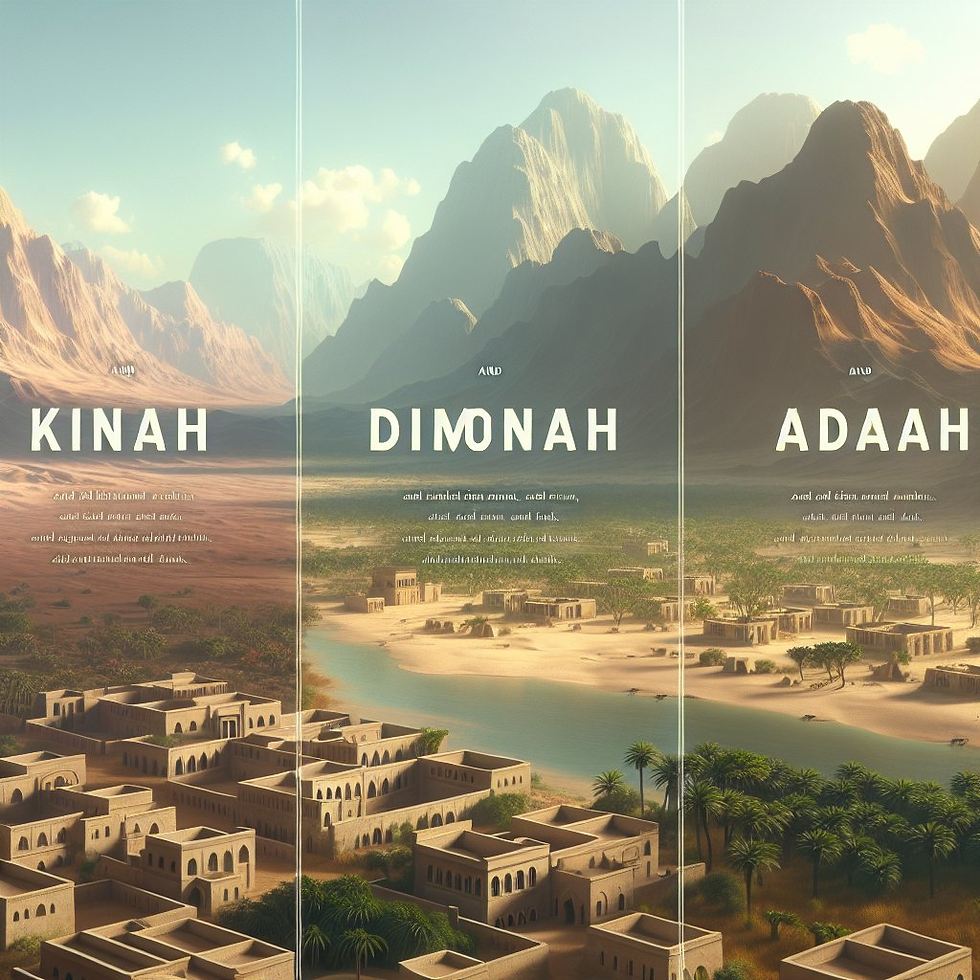
먼저 하나님의 완전하심입니다. 앞에서도 얘기 했듯이 본문 20-62절의 말씀은 유다 지파가 받은 땅에 어떤 성읍들이 있는지 나열하고 있습니다. 또한 성읍들을 나열만 하는 것이 아니라 크게 네 구역으로 나누어 설명하고 있지요. 21절에 “남쪽 끝 에돔 경계에 접근한 성읍들은,” 33절 “평지에는,” 48절 “산지는,” 61절 “광야에는,” 이렇게 자세하게 구역을 나누어서 각 구역에 있는 성읍 이름을 하나하나 열거하고 있습니다. 이것은 바로 하나님이 주신 약속이 어떤 모호한 이미지나 개념으로서만 존재하는 것이 아니라 우리가 만질 수 있는 실제적인 땅과 성읍으로 성취되는 것임을 알려주고 있는 것입니다. 이는 하나님의 약속이 반드시 우리의 삶에 구체적으로 실현된다는 것을 보여주는 것이지요. 그 먼 옛날 아브라함에게 주셨던 약속이 이렇게 유다 자손에게 이루어지는 것을 볼 때에 우리는 하나님의 말씀이 언제나 완전하다는 것을 알 수 있습니다. 그리고 그 하나님의 계획은 완전하셔서 우리의 계획과 생각을 뛰어넘으시지요. 자 이렇게 방대한 땅을 유다 지파가 여호수아에게 요구했기에 받았던 것이 아닙니다. 15:1은 이렇게 말하고 있습니다. “또 유다 자손의 지파가 그들의 가족대로 제비 뽑은 땅의 남쪽으로는 에돔 경계에 이르고,” 즉, 하나님께서 이들에게 이 넓은 땅을 주시기로 선택하셨다는 것입니다. 우리 함께 보았던 민수기에서 인구조사를 두번 하지 않습니까? 그 때마다 가장 인구가 많았던 지파가 어느 지파입니까? 네, 그렇습니다. 유다지파입니다. 유다지파는 또한 다윗의 지파이기도 하지요. 이 넓은 땅은 솔로몬 이후 단일 이스라엘이 분단 국가가 될 때에 유다지파와 베냐민 지파가 겨우 두지파 뿐이었음에도 불구하고 남유다를 세울 수 있었던 결정적인 역할을 했을 것입니다. 그리고 유다지파의 다윗의 자손으로 예수님이 이 땅에 오시지요. 이처럼 하나님은 당신의 완전하심을 따라 행하십니다. 그런데 서론에서 말씀드렸듯이 본문의 마지막절인 63절은 유다 지파가 여부스 족속을 쫓아내지 못했다고 합니다. 이것은 하나님의 약속의 성취가 완전하시지 않다고 말하려는 걸까요? 아니라면 대체 왜 이런 말씀으로 15장을 마무리하고 있는 것일까요?
Point 1: The Perfection of God (20-62)
First, let's examine the Perfection of God.
Verses 20-62 list the cities the tribe of Judah received by lot. The list is organized meticulously into four major districts:
Verse 21: The towns in the southernmost part, near the border of Edom.
Verse 33: The towns in the western foothills (Shephelah).
Verse 48: The towns in the hill country.
Verse 61: The towns in the wilderness.
The detailed categorization and naming of each city show that God’s promise is not just a vague image or concept; it is being fulfilled as tangible land and actual cities that they can touch and possess. This assures us that God's promises are always realized concretely in our lives.
Witnessing the fulfillment of the ancient promise given to Abraham in the actual land given to the sons of Judah reminds us that God’s Word is always perfect.
Furthermore, God's plan is so perfect that it transcends our own expectations and calculations. Judah did not receive this vast territory because they asked for it. Verse 1 says: "The allotment for the tribe of Judah, according to its clans, extended down to the border of Edom, to the Desert of Zin in the extreme south." God chose to give them this enormous land.
Which tribe was the most populous according to the two censuses in Numbers? It was Judah. Judah is also the tribe of David. This large territory would later play a decisive role in establishing the Southern Kingdom of Judah, even after Israel was divided into two nations (Judah and Benjamin). And, of course, from the line of David in Judah, Jesus Christ would come into this world.
God acts according to His perfect plan.
However, as I mentioned in the introduction, the final verse of the chapter, verse 63, states that Judah could not drive out the Jebusites. Does this imply that God's promise was somehow incomplete? Why does the chapter conclude with this particular statement?
그 이유는 바로 두번째, 인간의 불완전함 때문입니다. 63절 함께 읽겠습니다. “예루살렘 주민 여부스 족속을 유다 자손이 쫓아내지 못하였으므로 여부스 족속이 오늘까지 유다 자손과 함께 예루살렘에 거주하니라” 아니 쫓아내지 않았다는 것도 아니고 “못했다니” 이게 무슨 뜻일까요? 하나님의 능력이 여부스 족속이 믿던 신보다 약하여서 쫓아내지 못했다는 것일까요? 아니지요. 여호수아 4:24절 “여호와의 손이 강하신 것을 알게하며” 여호와의 손은 강하십니다. 또한 여호수아서는 시작부터 하나님께서 여호수아와 함께 하실 것을 몇번이나 말씀하셨습니다. 1:5 입니다. “네 평생에 너를 능히 대적할 자가 없으리니” 하나님께서는 당신의 완전하심을 따라 이미 그들에게 모든 능력을 주셨습니다. 이것은 여호수아서를 관통하고 있는 테마이지요. 그렇다면 어떻게 이들이 여부스 족속을 쫓아내지 못하였는가? 네, 그것은 인간의 불완전함 때문입니다. 우리는 그것을 서론에서 말씀드렸던 갈렙의 예를 통해서 유추해 볼 수 있습니다. 14장의 시작은 요단 서쪽 땅을 분배하는 장면이지요 그런데 뜬금없이 갈렙이 헤브론을 요청해서 기업으로 받는 장면이 나옵니다. 그리고 나서 15장 말씀에서 다시 유다 자손 땅의 경계에 대해서 얘기하는데 갑자기 또 갈렙이 헤브론과 드빌을 정복하는 이야기가 나오지요. 그것이 어제의 말씀이었지요. 분배의 얘기 뒤에 갈렙의 이야기 뒤에 분배의 얘기 뒤에 또 갈렙의 이야기. 이해가 안되는 이 샌드위치 구성에 비밀이 있습니다. 바로 갈렙이야말로 이들이 따라야했던 모범이라는 것을 분배의 시작부터 보여주고 가는 것입니다. 갈렙에 대한 표현을 보시면 14:8 “나는 내 하나님 여호와께 충성하였으므로” ; 9절 “네가 내 하나님 여호와께 충성하였은즉,” 14절, “그가 이스라엘의 하나님 여호와를 온전히 좇았음이라” 갈렙이 자신의 분깃을 달라고 하면서 했던 말이 이것입니다. 12절 “그 곳에는 아낙 사람이 있고 그 성읍들은 크고 견고할지라도 여호와께서 나와 함께 하시면 내가 여호와께서 말씀하신대로 그들을 쫓아내리이다” 갈렙에게는 믿음이 있었습니다. 그는 하나님께서 함께하시면 아낙사람이든 그들의 성읍이 크든 완전하신 하나님의 말씀대로 저들을 쫓아낼 수 있다는 믿음이 있었어요. 그 믿음으로 구한 성이 무슨 성입니까? 헤브론 성입니다. 어제 말씀 13절 입니다. “기럇 아르바 곧 헤브론을… 갈렙에게 주었으니 아르바는 아낙의 아버지였더라” 헤브론 성의 원래 이름은 기럇 아르바이고 아르바는 아낙 자손의 아버지, 즉, 조상이라고 합니다. 한마디로 여기가 아낙자손의 본거지인 것입니다. 하지만 갈렙은 어떻게 하였습니까? 그들을 쫓아내고 아낙의 세 아들도 쫓아내었습니다. 그들의 성읍이 아낙 자손의 본거지라고 할 지라도, 갈렙이 여호와께 충성하여 믿음을 가졌을 때에 그들을 모두 쫓아낼 수 있었습니다. 유다 자손들이 여부스 족속을들 쫓아내지 못하였던 것은 하나님이 능력이 없으셨던 것이 아니라 이들이 하나님께 온전히 충성하지 못하고 하나님께서 그들과 함께 하신다는 믿음이 없었기 때문인 것입니다.
Point 2: The Imperfection of Humanity (63)
The reason lies in the Imperfection of Humanity. Let’s read verse 63:
"Judah could not dislodge the Jebusites, who were living in Jerusalem; to this day the Jebusites live there with the people of Judah."
The text doesn't say they chose not to dislodge them, but they "could not dislodge" them. Does this mean God's power was somehow weaker than the gods the Jebusites worshipped? Absolutely not. Joshua 4:24 states clearly, "so that all the peoples of the earth may know that the hand of the Lord is powerful." The central theme of Joshua is that God is with them. As God stated in 1:5, "No one will be able to stand against you all the days of your life."
God, in His perfection, had already given them all the power needed to conquer. So, how is it that they could not drive out the Jebusites?
The answer lies in human imperfection, which we can deduce by looking at the example of Caleb, whom we mentioned earlier.
Notice the unusual sandwich structure of Chapter 14 and 15:
Chapter 14: Begins the distribution, then abruptly inserts the story of Caleb requesting Hebron (as a model).
Chapter 15: Details the vast territory of Judah, but again inserts the story of Caleb conquering Hebron and Debir (the passage from yesterday).
This seemingly disorganized structure holds a secret: Caleb's story is the intended model that the rest of Judah should have followed from the very beginning of the allotment.
Look at the descriptions of Caleb: 14:8, "I followed the Lord my God wholeheartedly"; 14:14, "because he followed the Lord, the God of Israel, wholeheartedly."
Caleb's claim in verse 12 was: "Even though the Anakites are there, and their cities are large and fortified, with the Lord helping me, I will drive them out, just as the Lord said." Caleb had the faith that the perfect God who was with him would enable him to drive out the Anakites, regardless of their size or the fortification of their cities.
What city did this faith allow him to claim? Hebron. Verse 13 says, "He gave Hebron to Caleb... Arba was the greatest man among the Anakites." Hebron's original name was Kiriath Arba, and Arba was the ancestor of the Anakites—it was their stronghold.
But what did Caleb do? He drove them out, including the three sons of Anak. Even though the city was the stronghold of the Anakites, when Caleb followed the Lord wholeheartedly and acted in faith, he was able to drive them all out.
The reason the sons of Judah could not dislodge the Jebusites was not a deficiency in God's power, but rather their failure to fully commit to God and their lack of faith that God was truly with them in that difficult final task.
말씀을 맺습니다. 하나님께서는 완전하십니다. 그분의 계획은 완전하시며 그분의 약속은 반드시 이루어집니다. 다만 우리가 하나님께 충성하지 못한다면, 우리가 하나님께서 우리와 함께하심을 믿지 못한다면 우리는 하나님께서 약속하신 것 조차도 이룰 수 없는 사람들이 될지도 모릅니다. 완전하신 하나님께 충성하십시오. 완전하신 하나님께서 우리 안에 계심을 믿으십시오. 여러분께서 갈렙과 같은 믿음을 가지실 때에 하나님의 뜻이 여러분의 삶가운데 완전하게 이루어 질 것입니다.
[Conclusion]
God is perfect. His plan is perfect, and His promises are certain to be fulfilled.
However, if we fail to commit ourselves fully to God, if we fail to believe that the perfect God is truly within us and working alongside us, we may become people who fail to accomplish even what God has already promised.
Commit wholeheartedly to the perfect God. Believe that the perfect God resides within you. When you have the faith of Caleb, God's will will be perfectly fulfilled in your life.
![20251210 [새벽묵상] 믿음의 유산, 어떻게 지킬 것인가? | How Shall We Preserve the Legacy of Faith? (수/Josh 16:1~10)](https://static.wixstatic.com/media/5952d3_0f4f800aad0c4f7c9b0de67fde2019c5~mv2.png/v1/fill/w_980,h_980,al_c,q_90,usm_0.66_1.00_0.01,enc_avif,quality_auto/5952d3_0f4f800aad0c4f7c9b0de67fde2019c5~mv2.png)
![20251208 [새벽묵상] 내게 복을 주소서! | Bless Me! (수/Josh 15:13~19)](https://static.wixstatic.com/media/aa39ed_a8331f6102c64bf9892879628dbe1d57~mv2.png/v1/fill/w_980,h_980,al_c,q_90,usm_0.66_1.00_0.01,enc_avif,quality_auto/aa39ed_a8331f6102c64bf9892879628dbe1d57~mv2.png)
![20251205 [새벽묵상] 어떤 기업을 받길 원하시나요? | What sort of inheritance do you want to receive? (수/Josh 13:15~33)](https://static.wixstatic.com/media/5952d3_e7e8c0845f544f3cb00e88fe541befa4~mv2.png/v1/fill/w_980,h_980,al_c,q_90,usm_0.66_1.00_0.01,enc_avif,quality_auto/5952d3_e7e8c0845f544f3cb00e88fe541befa4~mv2.png)
댓글